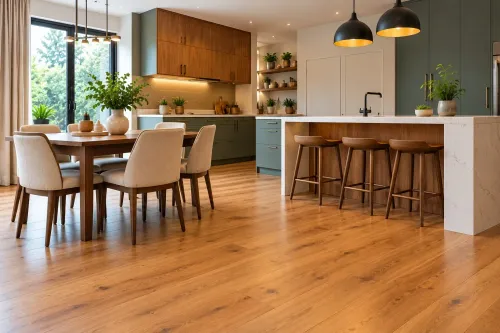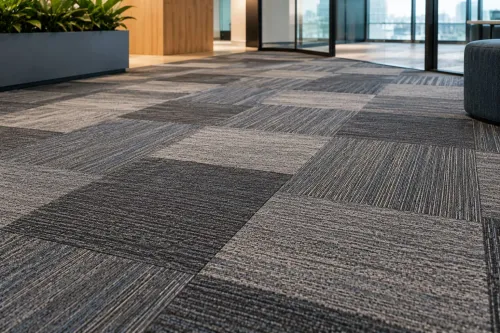


A floor feels luxurious because it performs well every day, not because its label or price sounds exclusive. By comparing comfort, appearance, technical specifications, room suitability, climate response, and installation quality, you can identify which premium flooring will remain attractive and practical after years of use.
Key takeaways
- Choose flooring by room use, moisture, traffic, and maintenance—not the luxury label.
- Test samples for sound, comfort, finish consistency, slip resistance, and wear-layer quality.
- Match material choice to Jaipur’s heat, dust, humidity changes, and cleaning routines.
- Treat subfloor preparation, expansion gaps, adhesives, and finishing as part of the specification.
The daily details that make a floor feel luxurious
A luxurious floor feels quiet, even, and comfortable before you consciously notice its price. Underfoot comfort comes from resilient backing, a stable surface, or the gentle give of well-finished wood—not simply a glossy appearance. Thermal feel matters too: stone and porcelain feel cool, while wood, vinyl, and carpet feel less harsh under bare feet.
| Quality | Daily effect | What to notice |
|---|---|---|
| Underfoot comfort | Less fatigue during standing and walking | A stable surface with suitable cushioning or controlled resilience |
| Acoustic performance | Fewer footsteps, echoes, and chair scrapes | Underlay, backing, installation method, and room reverberation |
| Visual consistency | The room looks calm rather than patched together | Matching shade, grain direction, tile edges, and grout colour |
| Tactile finish | The surface feels deliberate, not slippery or artificial | Controlled texture, smooth edges, and no rough transitions |
| Wear resistance | The floor keeps its composed appearance | Resistance to scuffs, stains, scratches, and dull traffic paths |
Installation creates much of the luxury effect. Precisely aligned joints, minimal lippage, accurate stair nosings, clean perimeter cuts, and thresholds placed under doors stop the eye catching defects. A continuous colour scheme can connect adjoining rooms, but bathrooms, balconies, entrances, kitchens, and outdoor areas still need suitable texture, drainage, or movement joints.
Visual consistency also requires realistic expectations with natural stone: veining, pits, fissures, and filled areas are part of its character, so a replacement piece from another batch may stand out. Premium flooring earns its reputation through how quietly it performs every day.
Choose the material around the room, not the label
A bedroom, hotel corridor, kitchen, and retail floor need different answers. Compare each material by moisture exposure, impact, rolling loads, acoustics, repair access, cleaning routine, and the feel you want underfoot—not by the word “luxury.”
| Material | Best fit | Strengths | Watch-outs |
|---|---|---|---|
| Engineered wood | Bedrooms, living rooms, executive offices, boutique hospitality | Natural wood surface, warmth, and repairable wear layers | Moisture, high heels, rolling loads, and poor humidity control can damage delicate finishes |
| Laminate | Busy homes, offices, retail areas needing hardwood-inspired finishes | Hard-wearing surface and lower cost than engineered wood | Water at joints, hollow acoustics, and difficult spot repairs; engineered wood versus laminate is a finish-and-maintenance decision, not simply a price choice |
| Vinyl | Kitchens, clinics, hospitality, and areas needing comfort | Quiet, resilient, and available in wood or stone looks | Check wear layer, chemical resistance, seams, and emissions certification |
| SPC | Commercial areas, corridors, and rooms needing rigid click installation | Stable under furniture and strong in demanding traffic zones | Harder underfoot and less forgiving of uneven subfloors; compare vinyl versus SPC by comfort, impact noise, and rolling loads |
| Natural stone | Feature living spaces, lobbies, reception areas | Unique veining, permanence, and strong visual presence | Sealing, staining, slip risk, and replacement mismatch; spare pieces from another lot may not match |
| Porcelain | Kitchens, bathrooms, entrances, terraces, and high-traffic interiors | Low absorption, abrasion resistance, and easy cleaning | Joints, coldness, breakage, and outdoor slope and wet-slip requirements still matter |
| Carpet | Bedrooms, hotel rooms, meeting rooms, and offices | Warmth, acoustic control, and comfort | Stains, dust, chair casters, and replacement matching |
| Hard flooring | Retail, corridors, dining, and public circulation | Fast cleaning and durable traffic paths | Usually needs rugs or acoustic treatment where comfort and noise control matter |
For premium commercial interiors, calculate cleaning chemicals, repairs, downtime, and matching-stock availability alongside purchase price. A visually striking floor is a poor choice if replacing one damaged section disrupts operations.
How to test whether a luxury floor is more than marketing
A premium price earns its place only when the product’s measurable performance matches its appearance. Treat “luxury” as a sales description, not a technical grade.
1. Inspect the sample in daylight and at an angle. Check colour consistency, texture, surface defects, plank dimensions and edge treatment. Fit two pieces together: uneven bevels, open joints, or a visible height difference will expose poor manufacturing and installation tolerance.
2. Request the specification sheet. Confirm wear layer thickness for resilient flooring, core construction, density or composition, the locking system, intended traffic class, stain and scratch test results, acoustic rating, and slip-resistance value. For tile, ask for water absorption and wet slip data; outdoor products also need drainage, thermal movement, substrate slope, and adhesive guidance.
3. Read the warranty exclusions, not just its headline duration. Look for exclusions covering moisture, direct sunlight, rolling loads, commercial use, wet mopping, chemical cleaners, subfloor movement, and installation by an unapproved contractor. Confirm whether replacement planks, tiles, or boards will remain available.
4. Match claims to named evidence. A FloorScore certificate addresses VOC emissions, not durability, waterproofing, slip resistance, or installation quality. For commercial interiors, ask for cleaning-chemical resistance, stain-repair procedures, expected maintenance intervals, replacement access, and downtime implications.
Reject a sample that looks impressive but has no traceable manufacturer, batch information, installation instructions, or test documentation. The cheapest long-term floor is the one that survives its actual traffic and can still be repaired with matching material.
Balance premium appearance with Jaipur’s climate and operating demands
A luxury floor for Jaipur must survive Jaipur heat and dust without losing its colour, finish, or cleanable surface. Strong sunlight can fade dark tones and heat can increase movement at joints, while dry indoor air from air-conditioning can cause wood boards to shrink or open at seams.
If you choose engineered wood, keep it away from direct cooling vents and ask for an installation system suited to controlled indoor humidity.
Monsoon moisture changes the risk. Water at entrances, damp footwear, and poorly dried spills can swell vulnerable edges, stain porous surfaces, or loosen weakly bonded flooring. Select sealed surfaces with tight joints, and check wet slip resistance rather than judging safety from gloss, texture, or price.
For level interiors, ask for dynamic coefficient of friction data under ANSI A326.3; 0.42 is a commonly cited minimum for areas expected to be walked on when wet.
Traffic determines whether a delicate residential finish belongs in a shop, office, corridor, or hotel lobby. Stains demand chemical resistance, scratches expose low-quality wear layers, and rolling loads punish soft surfaces, weak subfloors, and poorly supported joints.
For commercial interiors, compare commercial lifecycle cost, not just purchase price. Include cleaning chemicals, stain repairs, replacement access, matching-stock availability, and closure time during repairs; a less decorative specification can deliver the more luxurious result because it stays consistent under daily use.
Installation quality is part of the luxury specification
A premium floor is only as good as the surface beneath it and the details at its edges. Confirm the specified subfloor level tolerance before delivery; an uneven base telegraphs lippage, hollow spots, rocking boards, and open joints through an expensive finish.
Before installation, require these checks:
- Record moisture testing results for the screed or concrete, using the method specified for the flooring system. Excess moisture can cause adhesive failure, swelling, staining, or mould beneath resilient flooring.
- Plan movement joints at large areas, doorways, changes in substrate, and locations exposed to heat or sunlight. Do not cover a structural joint with tile or fill it with rigid grout.
- Dry-lay tiles or boards to align patterns, sightlines, and joints with doors and major furniture. Rectified tile still needs a grout joint; zero-joint installation increases chipped edges and uneven spacing.
- Check tile lippage, consistent grout colour, stair nosings, and slip resistance before fixing the full area. A polished surface that becomes dangerous when wet is a design failure.
- Resolve skirting and transitions before laying the floor. Thresholds should sit securely, protect exposed edges, and avoid abrupt height changes that catch shoes or wheels.
Use Flooringworld or another installer that records these measurements and approves the substrate in writing before work begins. Keep expansion gaps concealed beneath skirting where appropriate, but never remove them to achieve visual continuity.
Related service
LUXURY FLOORING LUXURY isn't what you see, it's what you feel- experience the comfort of world- class flooring. View service → |
Frequently asked questions
What makes a floor feel luxurious in daily use?
Quiet walking, an even surface, comfortable underfoot temperature, suitable resilience, and consistent finishing create a luxury feel beyond visual gloss.
How should you choose luxury flooring for a room?
Choose around the room’s traffic, moisture exposure, cleaning demands, acoustics, comfort needs, and natural light rather than relying on a product label.
How can you tell whether luxury flooring is more than marketing?
Inspect full-size samples and compare surface consistency, backing or construction, wear resistance, slip behaviour, acoustic response, maintenance instructions, and warranty terms.
What should you consider when choosing flooring in Jaipur?
Account for heat, dust, changing humidity, cooling systems, cleaning frequency, and the operating demands of the home or commercial space.
Why is installation part of a luxury flooring specification?
Subfloor flatness, moisture checks, acclimatisation, adhesive selection, expansion gaps, pattern alignment, and finishing determine how the floor performs and looks.