

A living room with hard flooring can look complete yet feel cold, echo loudly, or lack a clear arrangement for seating. By matching rug texture, dimensions, colour, fibre, and maintenance needs to the room, you can create a more comfortable and visually coherent space without replacing the existing floor.
Key takeaways
- Use a dense underlay to soften hard tile, stone, timber, or concrete floors.
- Choose low pile for easy cleaning and high pile for deeper cushioning.
- Place the rug under the front legs of seating to define the conversation area.
- Match pile, colour, and pattern to the room’s traffic, furniture, and proportions.
How Rug Texture Changes the Living Room Underfoot
Pile height sets the main underfoot experience. Flatweave rugs and low-pile rugs feel firm and stable, while high-pile rugs and shag rugs provide deeper softness, warmth, and cushioning. A dense underlay increases comfort and reduces the hard feel of tile, stone, timber, or concrete more than a thin rug alone.
| Texture or fibre | Underfoot feel | Everyday trade-off |
|---|---|---|
| Flatweave rugs | Firm, light, and cool | Easy to vacuum; less cushioning |
| Low-pile rugs | Mild softness with stable support | Furniture sits securely and doors clear more easily |
| High-pile rugs | Plush, warm, and cushioned | Crumbs, shedding, and compression marks are harder to manage |
| Shag rugs | Deepest softness and warmth | Cleaning thoroughly takes more effort |
| Wool | Springy, warm, and resilient | Recovers from foot traffic but can shed initially |
| Cotton | Soft, flexible, and lighter | Less substantial cushioning and faster wear |
| Jute | Textured, firm, and slightly coarse | Adds natural character but is not ideal for barefoot softness |
| Synthetic fibres | Range from smooth to plush | Practical construction can resist wear and simplify routine care |
Choose the thickest texture that suits your doors, furniture, and cleaning routine. Check door undercuts and thresholds first; a raised edge can bind a door or become a trip point. Over heated floors, confirm the flooring maker’s temperature and rug-pad limits because dense layers slow heat transfer.
Choosing Rug Materials for Comfort and Daily Use
Choose a dense, low-pile rug for most busy living rooms: it is easier to vacuum, less likely to catch claws, and safer around toys and furniture. Add a firm rug pad for cushioning; pile height alone does not determine comfort.
| Fibre | Best fit | Watch-outs |
|---|---|---|
| Wool rugs | Heavy traffic, children, and comfortable everyday use; wool springs back after sofa legs compress it. | New wool can shed, and spills need fibre-appropriate cleaning. |
| Cotton rugs | Lightweight rooms, casual use, and washable designs that make small spills manageable. | Cotton flattens faster and offers less resilience in high-traffic seating areas. |
| Jute rugs | Dry, low-spill rooms where you want a coarse natural texture. | Jute absorbs moisture, holds grime in its fibres, and can feel rough for crawling children or pets. |
| Synthetic fibres | Polypropylene or nylon suits pets, frequent spills, dust, and heavy traffic; low-pile versions vacuum easily. | Check the care label, since heat, dyes, and backing construction affect stain treatment. |
| Viscose or similar regenerated cellulose | Decorative rooms with limited traffic and little risk of wet spills. | Water marks, abrasion, and pile distortion can leave permanent damage. |
For direct sunlight, choose a solution-dyed synthetic fibre or a wool rug with documented colourfastness, then rotate the rug to even out exposure. Avoid shag and deep high-pile rugs where dust, pet hair, crumbs, or toy parts will disappear; they feel plush but demand more effort.
Using an Area Rug to Define the Seating Zone
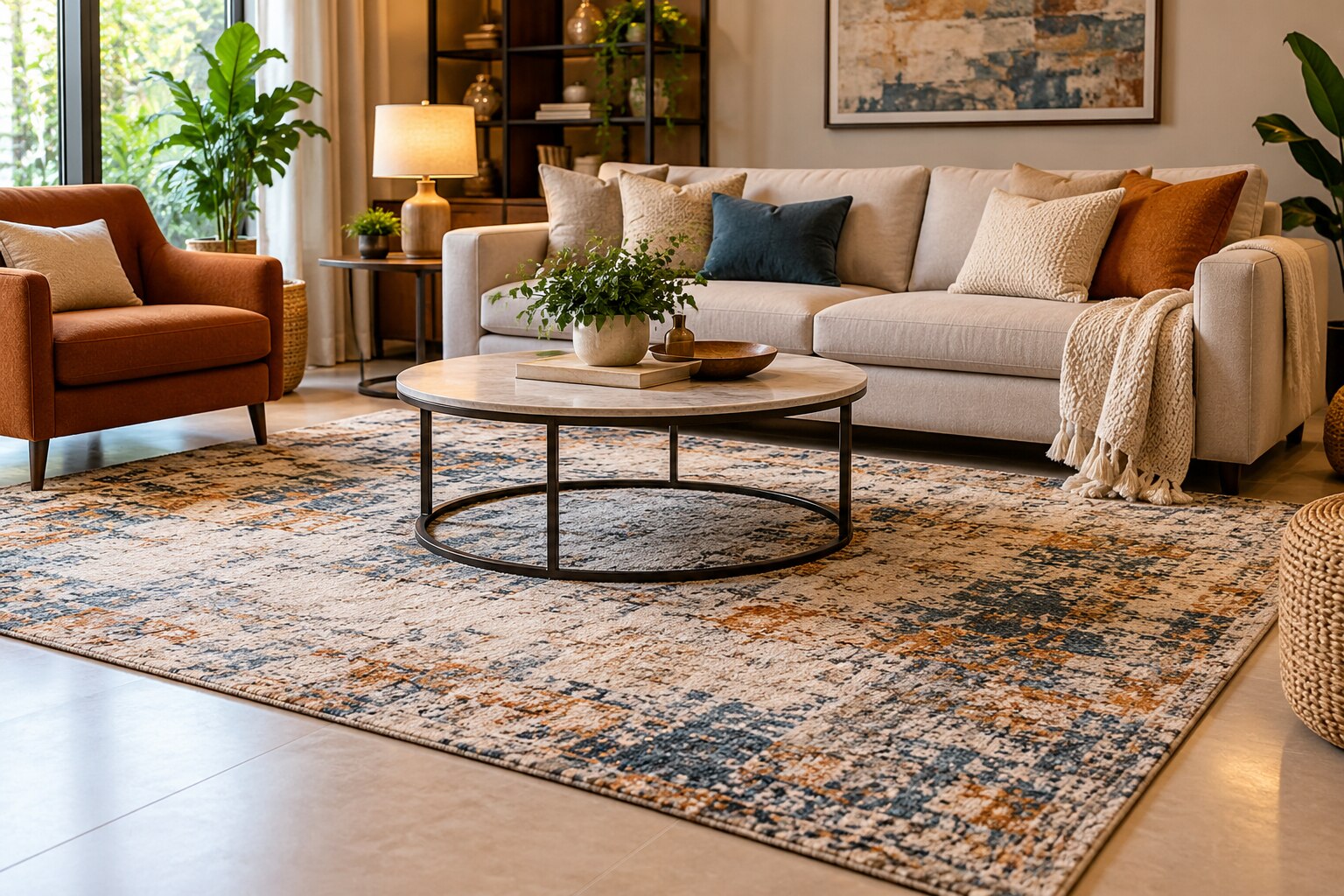
Position the rug so at least the sofa’s front legs and the chairs’ front legs rest on it; this connects separate pieces into one seating zone instead of leaving the coffee table stranded on bare flooring. Base the living room rug size on the furniture footprint, not the room’s total area.
- Use front legs on rug for a compact arrangement, with the coffee table fully supported and each chair close enough to overlap the rug visually.
- Choose all furniture on rug when the room is large enough; placing the sofa, chairs, and coffee table completely within its boundaries creates the strongest unified arrangement.
- Use open-plan zoning by placing a separate rug beneath the seating group, dining set, or reading chair, while keeping clear walking routes between functions.
Measure from the sofa’s outer edge to the farthest chair before buying, then add enough rug beyond the furniture to prevent a cramped border. A consistent 45–60 centimetres of visible floor around the rug usually gives the seating zone a deliberate edge without making it look undersized.
A rug that reaches only beneath the coffee table can make correctly placed furniture appear scattered.
Check the rug edge against door leaves, cabinet doors, and frequently used paths. A thick rug or curled corner that catches feet or prevents a door from opening is poorly positioned, regardless of its appearance.
How Colour, Pattern, and Pile Alter Room Proportions
Rug colour and rug pattern alter perceived room scale, but neither can correct a rug that is too small. Pale colours reflect more natural light and make boundaries recede; deep colours absorb light and increase visual weight, making a large room feel more intimate.
A large patterned rug groups separate sofas and chairs, while a small rug beneath only the coffee table can make the seating look scattered.
| Feature | Effect on the room | Effect on furniture balance |
|---|---|---|
| Light rug colour | Reflects daylight and visually expands the floor | Makes dark or bulky furniture feel lighter |
| Dark rug colour | Reduces apparent brightness and adds visual weight | Grounds pale furniture and suits larger rooms |
| Small-scale pattern | Adds interest without dominating the floor | Supports patterned upholstery |
| Large-scale pattern | Creates a stronger focal area and can make a broad room feel more contained | Unifies seating when the rug extends beneath chair and sofa fronts |
| Low pile or flatweave | Keeps the floor visually clear and preserves a sense of space | Provides a stable base under tables and seating |
| High pile | Adds softness, shadow, and visual volume | Makes lightweight furniture feel more anchored but can overwhelm compact rooms |
| Raised texture | Catches light unevenly and creates depth | Balances plain furniture; busy furniture needs a quieter surface |
Check the rug in daylight before buying. High pile feels softer, but its extra visual weight and compression marks can make a tight room look crowded.
Comparing an Area Rug with Other Living-Room Floors
An area rug wins when you want softer footing and less echo without committing the whole room to a new surface. It defines one seating zone, can be lifted for cleaning or redecorating, and lets you replace a damaged section rather than refinish or renew the entire floor.
| Option | Acoustic comfort and flexibility | Cleaning, replacement, and effort |
|---|---|---|
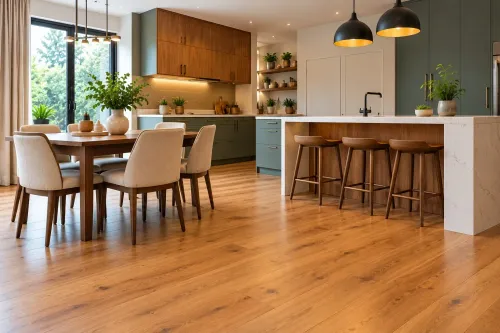
| Bare wood flooring | Hard and reflective underfoot; the rug adds cushioning without covering the full timber surface. | Protect the finish from grit and furniture movement, while keeping refinishing as a larger future task. |
| Laminate flooring | Easy to change visually with a rug, but sound remains sharper around uncovered areas. | Sweep and damp-mop the floor; repair matching boards can be difficult after damage. |
| Vinyl flooring | Resilient and simple to clean, with a rug adding warmth and visual zoning. | Check the pad first: rubber, PVC, or latex backing can stain or stick to some finishes. |
| SPC | Durable and water-resistant, but still hard and acoustically lively. | Low routine effort; the rug is easier to replace than the fixed floor. |
| Wall-to-wall carpet | Softer and quieter across the whole room. | More difficult to remove, dry, clean around furniture, and replace than a movable rug. |
The area rug versus carpet choice favours a rug when spills, layout changes, or future flooring work matter. Flooringworld can help you compare rug backing and pad compatibility with your existing surface, especially over heated floors.
Related service
AREA RUGS IN JAIPUR Transform your home or office with premium Area Rugs that combine style, comfort, and durability. View service → |
Keeping the Rug Safe, Clean, and Comfortable for Years
Protect both rug and floor by controlling grit, moisture, movement, and sunlight from the start. Choose a rug pad suited to the floor finish; PVC, latex, or rubber backing can stain, discolour, or stick to vinyl, sealed wood, and resilient flooring. Check the pad and floor periodically for trapped moisture or transferred colour.
- Place the rug clear of door swings, cabinet doors, sliding furniture, thresholds, and busy walking routes. A thick edge can catch feet or stop a door opening.
- Use a maintained vacuum for regular vacuuming rugs, adjusting suction and height to the fibre and pile. Remove grit promptly; aggressive brushing can loosen fibres and disturb settled dust.
- Blot spills immediately with a clean, absorbent cloth, working from the outside inward. Use spot treatment recommended for that fibre, avoid soaking the backing, and dry the area completely.
- Rotate the rug every few months and use curtains or blinds to limit direct sunlight, which can fade one section faster than another.
- On underfloor heating, follow the floor manufacturer’s maximum surface temperature and rug-pad compatibility limits. Thick pile and dense pads can restrict heat transfer.
Arrange professional rug cleaning when soil is embedded, odours persist, or the fibre needs specialist washing. Ask for fibre-appropriate methods and colourfastness testing first.
Frequently asked questions
How does rug texture affect living room comfort?
Flatweave and low-pile rugs feel firm and stable, while high-pile and shag rugs provide more softness, warmth, and cushioning. A dense underlay adds comfort over hard flooring.
Which rug material is best for daily living room use?
Choose a material according to traffic, cleaning needs, and the comfort you want. Durable, easy-care fibres suit busy rooms, while softer materials prioritise underfoot comfort and a richer feel.
How should an area rug define the living room seating zone?
Place the rug so the front legs of the sofa and chairs sit on it, creating a connected seating group. Select a size that leaves enough exposed floor to preserve circulation around the furniture.
How do rug colour, pattern, and pile change room proportions?
Light colours and restrained patterns can make a room feel more open, while dark colours and bold patterns create visual weight. A high pile adds depth; a low pile gives a cleaner, flatter appearance.
How do area rugs compare with hard living-room floors?
Rugs add warmth, softness, sound absorption, and visual definition that tile, stone, timber, and concrete do not provide alone. Hard floors remain easier to sweep and expose more of the room’s surface.