

A rug can look correctly sized in a product photograph yet leave sofa legs unstable, reduce a bedroom walkway, or catch beneath a door. By measuring the usable furniture area, comparing construction and fibres, and checking the delivered rug against your room, you can choose a size and specification that works in daily use.
Key takeaways
- Map furniture, doors, and walkways before choosing a rug size.
- Keep rug edges clear of doors and main walking routes.
- Choose wool for resilience or synthetic fibres for easier cleaning.
- Verify dimensions, backing, edge finish, and care instructions before paying.
How should you measure the room and map the furniture before buying?
Start with placement, not a catalogue size. Measure the usable furniture area and decide where the rug must sit before comparing products. Room dimensions alone can mislead you: a large room may have little clear floor once furniture, doors, and walkways are mapped.
Mark the layout with painter’s tape or folded sheets:
- Outline the sofa, chairs, bed, bedside tables, and coffee table.
- Mark doors and their full swing paths.
- Mark floor vents, radiators, cupboards, and drawers that need access.
- Measure the clear floor on every side of the furniture, including walkways.
- Check the bed’s actual width, length, frame depth, and bedside-table position.
Use these placement rules as a starting point:
| Option | What it means | When it applies |
|---|---|---|
| All seating on rug | Sofa and chairs sit fully on the rug | Best for a spacious, cohesive living-room conversation area |
| Front legs on rug | Every sofa and chair has its front legs at a consistent depth | Use when an all-seating rug would be impractically large |
| Under coffee table only | The rug supports the table but not the seating | Usually looks undersized and disconnects the seating |
| Under entire bed | Rug extends beneath the full bed footprint | Choose only when surrounding clearance remains usable |
| Beyond footboard | Rug starts under the bed and extends into the landing area | Works when you need warmth where your feet touch the floor |
| Two runners | One runner sits beside each side of the bed | Practical in a narrow bedroom |
Photograph or sketch the taped outline, then compare it with the seller’s exact finished dimensions. Include a usable landing surface beside the bed and at its foot rather than assuming a standard layout fits.
Which rug size and placement suits a living room or bedroom?
Start with a standard size, then test it against the taped furniture outline: 5×8, 6×9, and 8×10 feet are planning points, not guarantees. Keep roughly 18–24 inches of rug beyond a bed’s sides and foot when the room permits; in narrow bedrooms, runners can protect circulation better.
| Size | Living room use | Bedroom use |
|---|---|---|
| 5×8 ft | Compact seating arrangement; keep front legs supported | Small bedroom or double bed, extending beyond sides and foot |
| 6×9 ft | More front-leg coverage for sofa and chairs | Many beds, with a useful landing area beyond the footboard |
| 8×10 ft | Larger group around a coffee table | Queen bed, or reach beyond both bedside areas |
| Larger than 8×10 ft | Keep sofa, chairs, and table together without furniture hovering at the edge | Use when bedside clearances and walkways remain open |
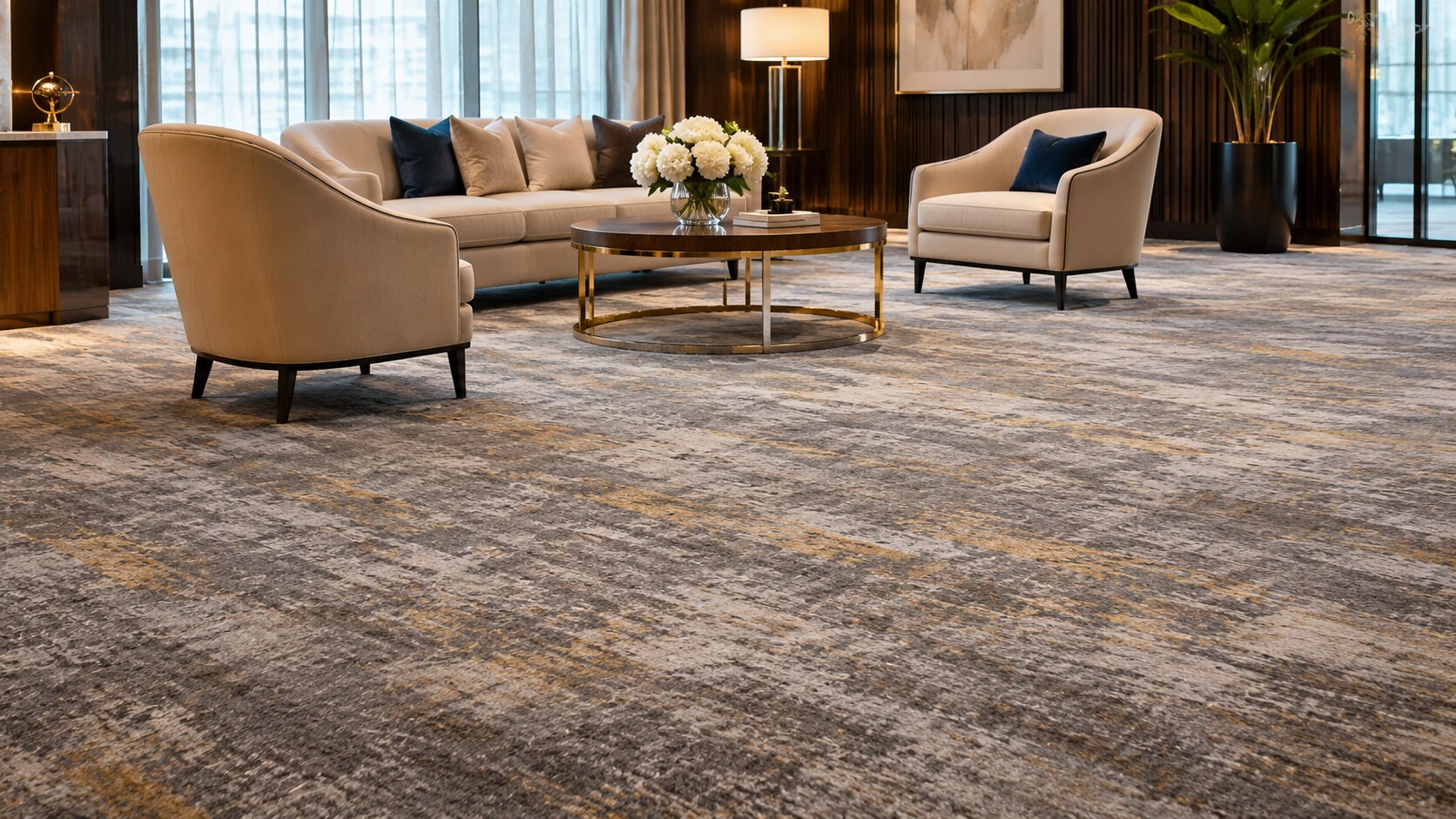
Against a wall, align the rug with the sofa and place its front legs on it; do not centre it in empty floor. In floating open-plan seating, keep every piece on the rug or use its boundary to define the conversation zone. Leave enough rug beyond the coffee table for chairs to remain supported.
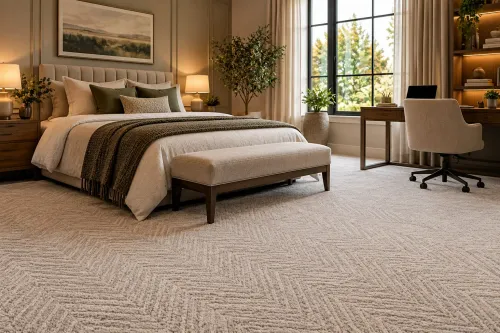
For a bed, choose full-bed coverage, a rug extending past the footboard, or two runners. Photograph the taped layout and verify doors and walkways before ordering Area Rugs.
What clearances and construction details prevent daily-use problems?
A rug should clear every fixed feature before you order. Keep it outside a door’s swing, or test the finished rug and pad with the door fully open. Leave floor vents, radiator outlets, cupboard doors, and drawers unobstructed.
Keep edges away from damp and heat sources, and leave a visible strip of floor between rug and wall when the room needs breathing space. Test thickness at thresholds and under doors: a raised edge or thick pad can catch toes, stop a robot vacuum, or block the door.
Judge pile height with density; height alone is not quality.
| Construction | Daily-use trade-off | Practical placement |
|---|---|---|
| Flatweave | Thin, practical, and easiest beneath doors | Bedrooms, walkways, and rooms needing simple clearance |
| Low- or medium-pile | Easier to maintain and less likely to destabilise furniture | Busy seating areas and beneath beds |
| High-pile or shag | Soft underfoot but compresses, traps more dust, and can hinder vacuums | Use only where doors and furniture remain stable |
| Tufted or hand-knotted | Tufted rugs need shedding and backing checks; hand-knotted rugs reflect labour and materials, not guaranteed suitability | Choose for texture or pattern after checking maintenance |
- Add a rug pad slightly smaller than the rug to reduce sliding, bunching, and grit-related floor wear. Confirm that its backing is approved for wood, stone, tile, or resilient flooring; PVC, rubber, or latex can trap moisture or mark some finishes.
- Treat Designer Area Rugs as a design category, not proof of durability. Check pile density, fibre, backing, pets, spills, and your cleaning capacity before choosing one.
Which rug fibre is practical for your bedroom or living room?
For a busy living room with pets, children, or frequent spills, choose a fibre and construction you can clean without special handling. Wool is resilient and recovers well from furniture compression, but new wool can shed; avoid aggressive vacuuming with a rotating brush at first.
| Fibre | Practical strengths | Main cautions |
|---|---|---|
| Wool | Resilient; recovers from furniture marks | Early shedding; follow fibre-specific care |
| Cotton | Casual feel; washable when the label permits | Wears or flattens sooner in heavy seating areas |
| Silk | Fine surface and visible sheen | Careful placement and specialist cleaning |
| Viscose or other regenerated cellulose | Silk-like sheen | Water, rubbing, and spot cleaning can mark or distort it |
| Nylon | Strong abrasion resistance; good shape recovery | Check construction and colour performance |
| Polyester | Strong colour and stain resistance | Can crush more readily under furniture |
| Polypropylene | Moisture resistance and lower cost | Feel and wear depend heavily on construction |
| Blends | Balance properties from multiple fibres | Check the percentage of each fibre |
Avoid viscose near wet spills, pets, or children unless its care instructions specifically support that use. Sunlight, traffic, pile density, twist, backing, and construction affect performance as much as the fibre name.
Blot a spill instead of rubbing, then follow the care label and test any solution in an inconspicuous area. Handmade natural-fibre rugs may need specialist cleaning. Choose silk or delicate fibres only when you accept that extra effort.
What should you verify with an Area Rugs Dealer or Supplier before paying?
Before paying, ask the Area Rugs Dealer or Area Rugs Supplier to record the rug’s specifications and return terms on the invoice or quotation.
- Exact finished dimensions and manufacturer’s size tolerance
- Fibre content, construction method, pile height, and pile density
- Backing material and country of manufacture
- Fibre-specific care instructions and a written return policy
Hand-knotted, hand-tufted, and handwoven rugs can differ slightly from their stated size. Request the manufacturer’s permitted variation, then measure the delivered rug before discarding its packaging or fixing furniture placement.
Check these purchase details before accepting the rug:
| Check | Why it matters | What to confirm |
|---|---|---|
| Pad and backing | Some materials trap moisture or transfer compounds onto flooring | Confirm compatibility with wood, stone, tile, or resilient flooring; ask whether the pad or backing contains PVC, rubber, latex, or other plastic |
| Colour and sheen | Showroom lighting can change the apparent shade and texture | Obtain a physical sample or photograph the rug in your room during daylight and warm evening lighting |
| Pattern coverage | Furniture can hide the design you paid for | Check what remains visible after placing the sofa, bed, and tables |
| Designer Area Rugs label | A design category does not prove durability | Judge viscose content, tufting, pile density, traffic resistance, pets, spills, and cleaning demands |
Flooringworld can help compare documented rug specifications with a taped room layout and floor finish in Jaipur. Follow the care label after delivery: blot spills, do not rub, and test cleaning products on an inconspicuous area first. Handmade natural-fibre rugs may require specialist cleaning.
Related service
AREA RUGS IN JAIPUR Transform your home or office with premium Area Rugs that combine style, comfort, and durability. View service → |
Frequently asked questions
How should you measure a room before buying an area rug?
Measure the usable furniture area rather than the room alone. Mark sofas, beds, doors, walkways, and clearance zones with masking tape so you can see where the rug must sit.
Which rug size and placement suits a living room?
Place the rug so the front legs of the seating sit on it, or fit all major furniture within its boundaries in a larger room. Keep door swings and main walkways clear.
Which rug size works best in a bedroom?
Position the rug beneath the bed with an even border extending beyond the sides and foot. Check that drawers, doors, and bedside movement remain unobstructed.
What construction details prevent daily-use problems?
Check the rug’s pile height, backing, edge binding, and ability to lie flat. Confirm door clearance, inspect for curled edges, and use a suitable rug pad on smooth floors.
Which rug fibre is practical for a bedroom or living room?
Wool suits high-use rooms because it is resilient and comfortable. Polyester and polypropylene offer easier stain management, while viscose needs gentler care and suits lower-traffic areas.