

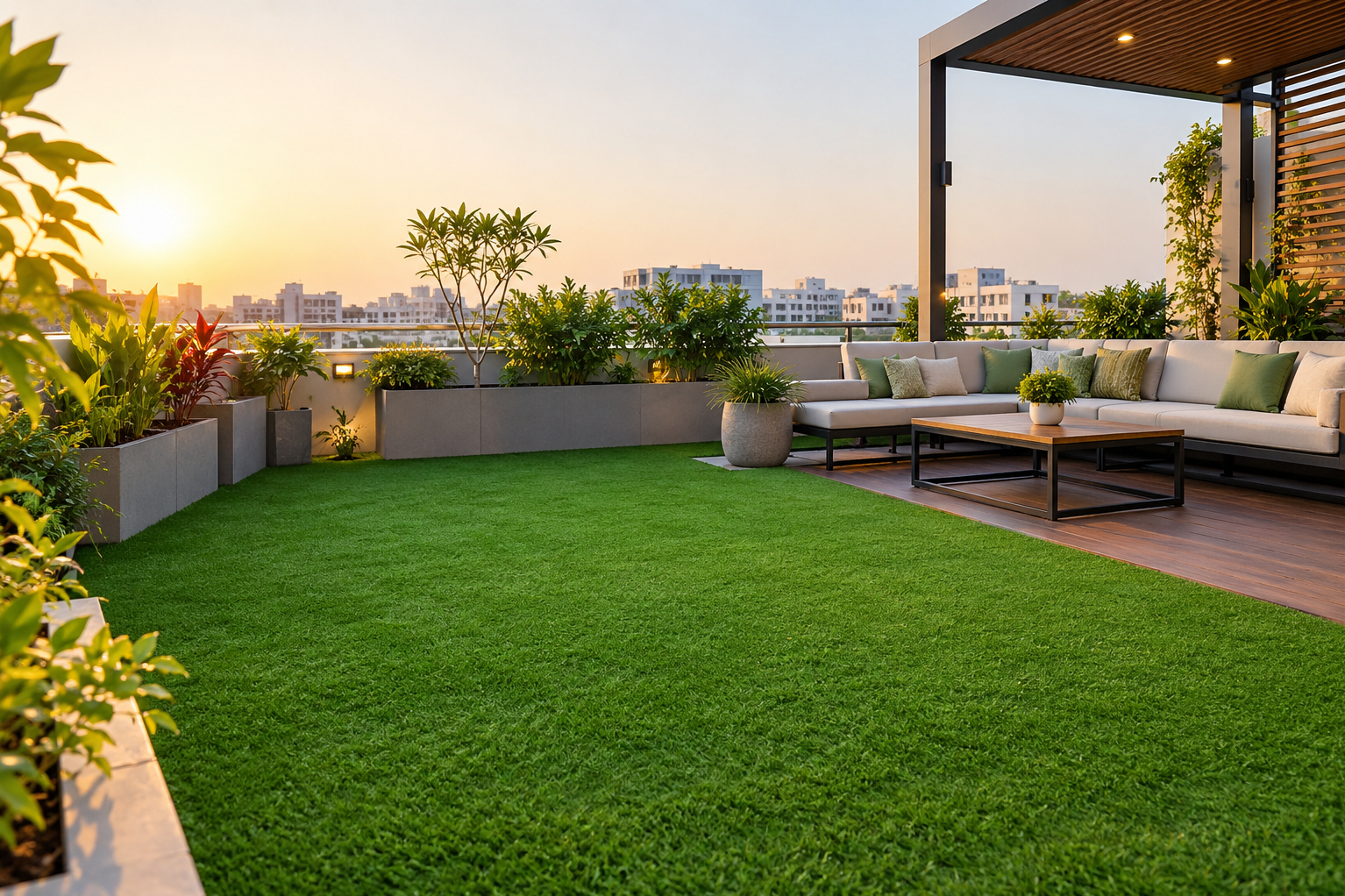
A successful artificial landscape starts long before the green surface is installed. Base preparation, drainage, traffic, sunlight, edge treatment, and product specification all influence the final appearance. Customers considering Artificial Grass for terraces, hospitality spaces, commercial properties, and landscape projects should therefore evaluate the complete installation rather than choosing on colour alone.
This is especially relevant in Jaipur, where strong sunlight, dry weather, dust, and seasonal rain can affect outdoor design decisions.
Define the Purpose of the Space
Begin by deciding how the finished area will be used.
A decorative terrace that receives occasional foot traffic has different requirements from a café seating area, children's activity zone, event venue, commercial landscape, or regularly used rooftop.
The expected activity influences the appropriate pile, density, backing, and installation approach.
It also helps determine where furniture, planters, walkways, and other features should be positioned.
Inspect the Base Surface
The quality of the surface beneath Artificial Grass is fundamental.
Terraces may have tiled, concrete, or prepared bases. Landscape areas may require different groundwork.
Before installation, inspect the surface for:
- Significant unevenness
- Loose sections
- Drainage problems
- Cracks requiring attention
- Poorly finished edges
- Existing water accumulation
Correcting these issues first can improve both appearance and usability.
Plan Drainage Carefully
Outdoor installations need an appropriate way for water to leave the surface.
This matters during Rajasthan's monsoon period and whenever the area is washed. Poor drainage may allow water to remain where it is not intended.
Terrace slopes, outlets, and the drainage characteristics of the installation should therefore be evaluated before material is laid.
Evaluate Sunlight and Heat Exposure
Jaipur's summer sun can be intense.
Any exposed outdoor surface may become warm under prolonged direct sunlight. Consider when people will use the space, whether shade structures are available, and how the surrounding architecture affects exposure.
Hospitality and commercial projects should pay particular attention to customer usage patterns.
Look Closely at Product Appearance
Artificial grass varies considerably in texture and visual character.
Pile height, fibre density, blade shape, and colour variation influence how natural the finished surface appears. A product intended mainly for decorative use may differ from one selected for frequent foot traffic.
Physical samples are useful because they allow designers and customers to examine the material from both close range and normal viewing distance.
Plan Joints and Edges
Large installations may require multiple sections of material.
Joint positioning and fibre direction should be planned to create a consistent appearance. Edges around walls, planters, steps, drains, and architectural features also require careful finishing.
These details often distinguish a polished installation from one that looks improvised.
Establish a Simple Maintenance Routine
Artificial grass eliminates mowing and watering, but periodic care remains useful.
Dust, leaves, and loose debris should be removed as required. Areas exposed to food, pets, or heavy activity may need more frequent cleaning.
For commercial sites, adding this routine to regular property maintenance helps preserve presentation.
Aradhya Studio provides Artificial Grass and flooring solutions for residential, hospitality, landscape, and commercial projects in Jaipur. Customers preparing for installation can benefit from assessing the base, drainage, sunlight, traffic, design, and maintenance requirements together.
When the planning is thorough, artificial greenery can become a practical landscape element that complements the property while reducing many of the routine demands associated with maintaining natural grass in Rajasthan.