

The right wall-to-wall carpet depends on where it will be used, how much traffic it must handle, and how the floor will be cleaned and maintained. By comparing carpet with hard flooring, choosing measurable specifications, and planning the installation correctly, you can decide whether it suits a bedroom, office or both.
Key takeaways
- Choose soft, insulating carpet for bedrooms and durable low-pile carpet for offices.
- Specify solution-dyed fibres and low pile for high-traffic workstations and corridors.
- Compare carpet with tiles, rugs and carpet tiles by comfort, repairs and replacement.
- Protect your investment with a level subfloor, professional installation and regular vacuuming.
Why wall-to-wall carpet works particularly well in bedrooms
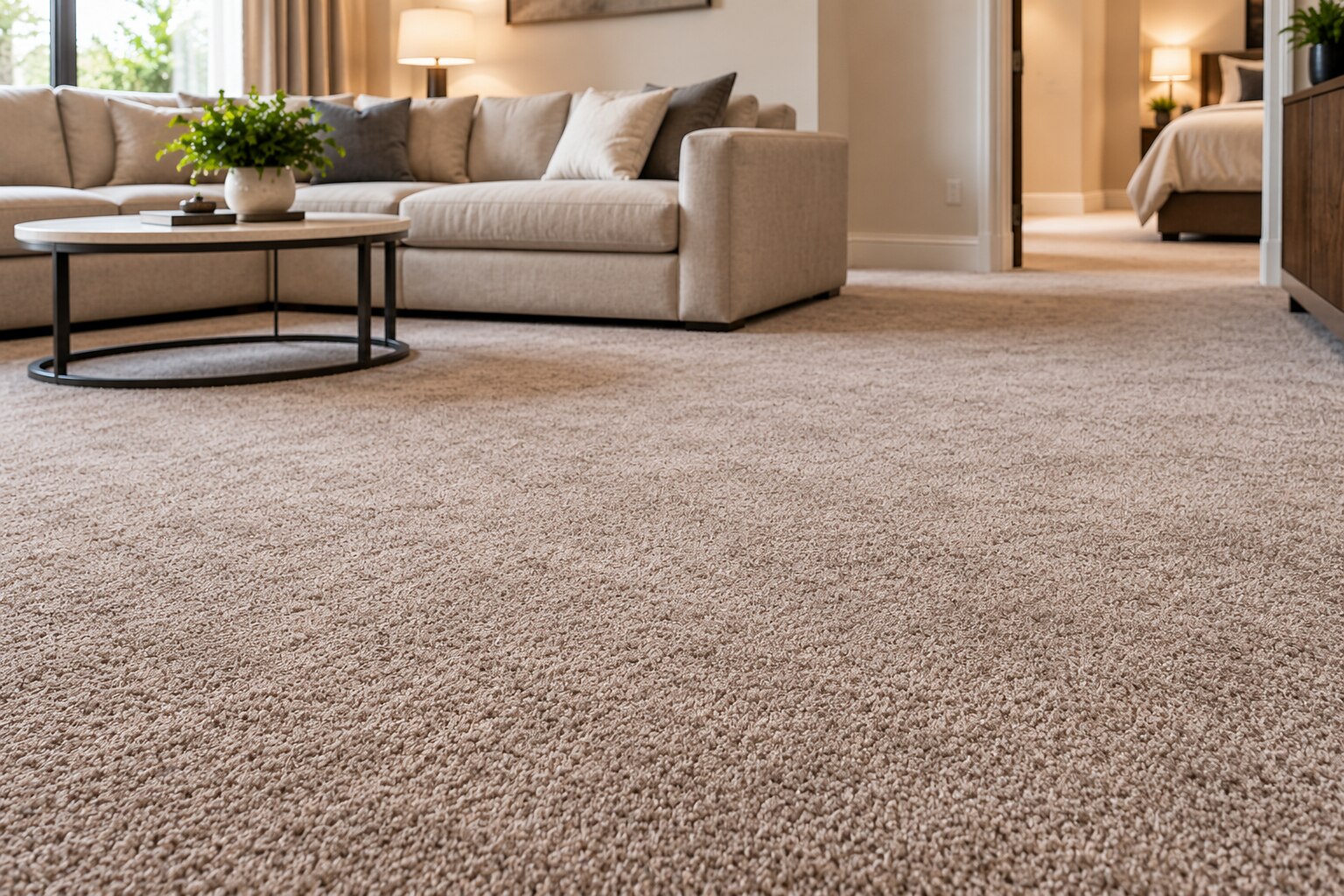
Bare feet meet a softer, warmer surface when you step out of bed, and the benefit continues across the room rather than stopping at a small rug.
The everyday gains are practical:
- Bedroom carpet feels warmer underfoot because its low thermal conductivity slows heat loss at the floor. It improves perceived thermal comfort but cannot correct a cold or damp subfloor.
- Its fibres and underlay absorb footfall, reducing impact noise from walking, dropped objects and moving bedside furniture. They soften reflected sound more effectively than smooth flooring, though they do not soundproof adjoining rooms.
- A continuous fitted surface creates safer footing beside the bed by removing rug edges that can curl, slide or catch a toe during a night-time walk.
Underlay determines more than softness. Choose a compatible product with enough resilience for the carpet construction; an excessively thick or soft layer can make bed legs unstable, encourage wrinkling and reduce indentation recovery. Inadequate underlay makes the floor feel harsh and accelerates wear.
Wall-to-wall installation also gives the bedroom a consistent surface with fewer interruptions and no gaps where dust collects. Protect that comfort by vacuuming according to use, treating spills promptly and arranging periodic professional extraction. A poorly prepared or uneven subfloor can still cause ripples, so inspect and level it before installation.
How to specify carpet for workstations, corridors and meeting rooms
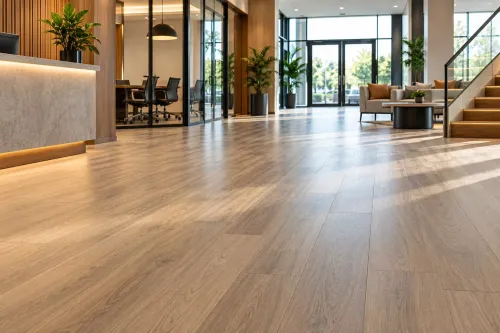
Wall-to-wall office carpet makes practical sense when you want quieter work zones, underfoot comfort and a continuous finished surface, but not necessarily across every entrance. Put cleanable tile or another hard surface at dusty or wet thresholds; soil and moisture brought into carpet accelerate staining and wear.
Specify by use, not softness or colour. Workstations need dense, low-profile construction that allows castors to roll without crushing the pile; corridors and reception areas need a heavy-traffic rating for repeated footsteps, turning and furniture movement. Meeting rooms see less continuous traffic, but chair legs and rearranged tables still require stable backing.
- Map traffic: mark entrances, main corridors, printer routes, workstation aisles, meeting rooms and reception areas as separate zones.
- Match construction: choose the manufacturer’s commercial light, medium or heavy traffic class for each zone, then confirm pile density, backing and castor suitability. Add an appropriate chair mat where rolling chairs will work directly on the carpet.
- Plan upkeep: set vacuuming frequency by traffic, remove spills immediately and schedule periodic professional extraction. Grit left in a busy aisle acts like abrasive underfoot.
Use carpet tiles where local damage, changing layouts or leased-office reinstatement makes replacement likely. Keep spare tiles from the installed dye lot, because a replacement can differ from surrounding carpet after fading, pile-direction changes and soiling.
Carpet versus tiles, hard flooring, rugs and carpet tiles
Broadloom carpet delivers the most continuous, quiet and forgiving surface, but each alternative wins under different conditions.
| Option | Main advantage | Main drawback |
|---|---|---|
| Broadloom carpet | Warm underfoot, quieter and visually seamless | Needs precise measuring, seam planning and power stretching |
| Ceramic tile | Hard, washable and widely available | Colder, noisier and less forgiving underfoot |
| Porcelain tile | Dense, durable and moisture-resistant | Hard, cold and acoustically reflective |
| Vitrified tile | Low absorption and easy cleaning | Slippery when wet, with little impact comfort |
| Laminate | Timber appearance at moderate cost | Sensitive to moisture and impact noise |
| SPC | Stable, water-resistant and resilient | Harder and less sound-absorbing than carpet |
| Vinyl | Comfortable, quiet and simple to clean | Can dent, scratch or show subfloor defects |
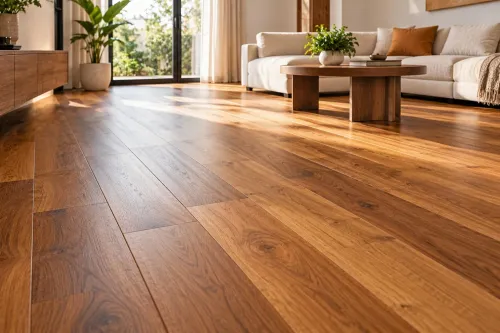
| Hardwood | Natural appearance and repairable surface | Costs more and needs protection from moisture and scratches |
| Area rugs | Easy to place, remove or replace | Expose edges, shift underfoot and leave uncovered floor |
| Carpet tiles | Damaged sections lift out individually | Replacement tiles can differ in dye lot, wear or pile direction |
Carpet reduces reflected footfall and speech noise more effectively than smooth hard floors; compare acoustic data using Noise Reduction Coefficient under ASTM C423. It is not soundproofing.
Choose broadloom for a unified bedroom or office floor. Choose carpet tiles where chairs, corridors or leased-office changes make local replacement important. Broadloom still needs a dry, level substrate: wrinkles, peaking and failed seams follow poor preparation. Carpet improves traction but wet areas, loose edges and height changes remain trip hazards.
How fibre, pile, colour and performance specifications change the result
Compare the carpet’s construction and test data before judging its colour or softness. Nylon offers strong recovery under office traffic; polypropylene prioritises stain resistance at a lower cost but can flatten sooner; wool provides a resilient, comfortable finish with higher purchase and care demands. Ask for the manufacturer wear rating and the intended traffic class.
| Specification | What changes | What to compare |
|---|---|---|
| Pile construction | Cut pile gives a soft, formal surface but shows shading and traffic lanes. Loop pile hides some soil yet can snag on sharp objects. Cut-and-loop pile adds pattern and disguises marks. | Choose low pile and high pile according to use; dense, low pile suits desks and corridors better than deep plush pile. |
| Density and thickness | Higher pile density resists crushing. Total thickness affects comfort, door clearances and rolling effort, but extra thickness does not guarantee durability. | Check pile density, total thickness and castor-chair suitability together. |
| Backing type | The backing controls dimensional stability, seam behaviour and how the carpet responds to movement or moisture. | Compare backing type and installation requirements, not fibre alone. |
| Appearance and protection | Medium-value, multi-tone patterns hide tracked soil; pale solids show stains, while dark solids reveal lint and dust. | Check stain treatment, colour consistency and cleaning instructions. |
For commercial interiors, request EN 1307 classification, the fire classification and test documentation rather than accepting “heavy duty” as proof. A bedroom can prioritise softness; an office needs rolling-load performance, secure edges and a backing that will not deform around chair routes.
Installation and maintenance decisions that protect the investment
A failed installation usually begins below the carpet. Check that the subfloor is dry, clean, sound and level; repair cracks, movement, loose tiles and damp areas before measuring. Confirm the underlay suits the carpet, traffic and adhesive system, then document seam positions and keep spare material from the same dye lot.
1. Test the dry subfloor before installation, especially over concrete. Carpet can hide a stain, not moisture or major unevenness; those defects can telegraph through the surface and break seams or adhesive bonds.
2. Choose low-emitting carpet, adhesive and underlay, then ventilate during installation and after it is finished. New materials can release VOC emissions, while carpet can hold dust until removed. Ask for product emissions information and use vacuum filtration rated for fine particles.
3. Plan cleaning around traffic, not convenience. Follow the Carpet and Rug Institute’s guidance: vacuum bedrooms routinely, increase frequency at office entrances, remove spills promptly and schedule professional extraction. After wet cleaning or a leak, use the 24-to-48-hour drying window; trapped moisture creates odour and mould risk.
4. Record the carpet specification, dye lot, adhesive and seam map for future repairs. Flooringworld can help verify these details before fitting. For noise-sensitive offices, compare the carpet-and-underlay assembly’s Noise Reduction Coefficient under ASTM C423; it reduces reflected speech and footfall noise, but does not soundproof adjoining rooms.
Related service
WALL TO WALL CARPET Upgrade your interiors with premium wall-to-wall carpet solutions that combine comfort, style, and durability. View service → |
Frequently asked questions
Why does wall-to-wall carpet work well in bedrooms?
It provides a continuous soft, warm surface underfoot, reduces room noise and avoids gaps around small rugs.
What carpet suits office workstations and corridors?
Choose low-pile carpet with strong soil resistance and durable fibres; corridors need higher wear performance than private offices.
How does carpet compare with tiles, hard flooring, rugs and carpet tiles?
Carpet offers warmth and acoustic comfort, while hard flooring simplifies cleaning, rugs cover smaller areas and carpet tiles make local replacement easier.
Which carpet specifications change the finished result?
Fibre type, pile construction, colour, density, backing and performance ratings affect comfort, appearance, durability and maintenance.